
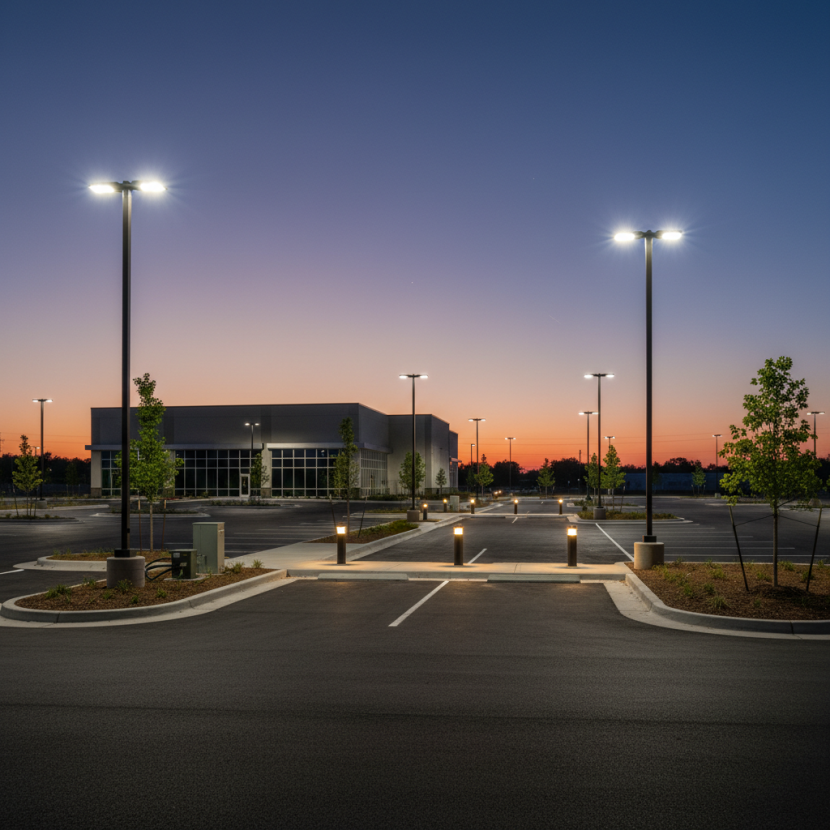
Managing a commercial property involves a mountain of high-stakes decisions. You want your visitors to feel safe, your liability to remain low, and your energy bills to stay manageable. Finding the perfect balance between visibility and cost-effectiveness is often the hardest part of the job. Choosing the right lights for your new parking lot requires more than just picking a bright bulb from a catalog. It’s a strategic investment that defines the first impression of your business. You need a solution that works every single night without fail.
Assessing Your Specific Lighting Needs
Every parking lot has a unique fingerprint. A small retail strip has different requirements than a massive industrial warehouse complex. You must look at the physical dimensions of your space before buying a single fixture. Consider the flow of traffic and where pedestrians are most likely to walk. These high-traffic zones need more intense illumination than the back corners of a lot. But you also cannot leave those corners in total darkness.
Security is your primary objective here. Dark spots are an invitation for trouble. When you work with American Lighting Systems, you get access to the highest quality parking lot lights designed to eliminate these shadows. Their fixtures provide a crisp, even throw of light that makes every corner visible. It’s about creating an environment where people feel comfortable walking to their cars at midnight. Safety isn’t just a feeling. It’s a measurable metric.
Think about the height of your poles. Standard mounting heights usually range from 15 to 30 feet. Higher poles can cover more ground but might require more powerful lamps. Shorter poles offer a more intimate feel but require closer spacing to avoid dark gaps. You have to find the sweet spot for your specific acreage. Don’t guess. Measure your lot twice.
Local ordinances often dictate your choices. Many cities have strict light pollution laws. These regulations often require Full Cutoff fixtures that prevent light from spilling into the sky or onto neighboring properties. This is often called light trespass. You don’t want a lawsuit from the apartment complex next door because your lights are shining into their bedroom windows. Check your local codes early in the process.
Understanding Light Distribution Types
Lighting isn’t just about brightness. It’s about direction. The Illuminating Engineering Society (IES) defines several distribution patterns to help you direct light exactly where it belongs. You don’t want to waste energy lighting up the street or the side of your building. You want the light on the pavement. Efficiency starts with the right pattern.
- Type III Distribution: This is the most common choice for general parking areas. It casts light forward and to the sides, making it perfect for poles placed along the perimeter of the lot.
- Type IV Distribution: Often called a forward throw, this pattern pushes light out in front of the fixture with very little backlight. It’s ideal for lighting wide areas from the edge of a property.
- Type V Distribution: This creates a circular or square pattern around the pole. Use this for poles located in the center of a large parking island to get 360-degree coverage.
Choosing the wrong pattern leads to uneven lighting. You’ll end up with bright hot spots and dangerous dark zones. This creates a strobe effect for drivers that can be disorienting. It’s also hard on security cameras. Digital sensors struggle to adjust to extreme contrasts in light levels. Consistent distribution is the key to clear footage.
High-quality optics make a massive difference. Cheap fixtures often use plastic lenses that yellow and crack over time. This degrades the light pattern and wastes electricity. American Lighting Systems uses premium materials to ensure their distribution patterns remain precise for years. You want a lens that stays clear. You want a beam that stays focused. Quality pays for itself.
The Dominance of LED Technology
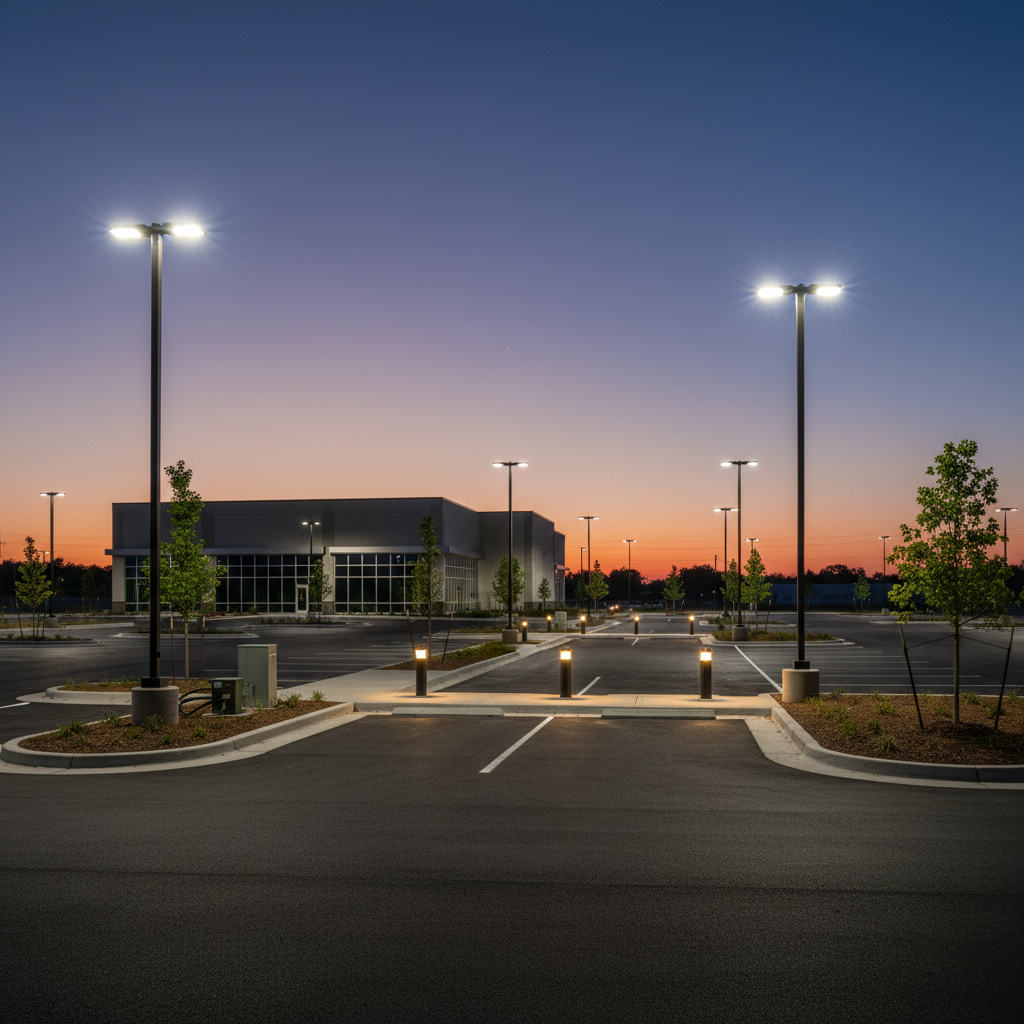
The era of High-Pressure Sodium (HPS) and Metal Halide is over. LED technology has completely taken over the commercial lighting world for good reason. It’s more efficient. It lasts longer. It offers better color rendering. If you’re still considering older bulb types, you’re essentially planning for an expensive upgrade in the very near future. Stick with modern tech.
Energy savings are the biggest draw. LEDs use about 50% to 70% less electricity than traditional HID lamps. This adds up to thousands of dollars in savings every year for a medium-sized lot. But the savings don’t stop at the power bill. Maintenance costs also plummet. Traditional bulbs need replacing every two years. Good LEDs can last over a decade.
Color Temperature is another critical factor. This is measured in Kelvins (K). For parking lots, 4000K to 5000K is the gold standard. This range provides a bright, cool white light that mimics daylight. It helps people see colors accurately. This is vital for identifying car colors or clothing in the event of an incident. Warm yellow light belongs in a living room, not a parking lot.
Lumen output tells the real story. Don’t look at wattage alone. Wattage measures power consumed, while lumens measure light produced. Modern LEDs produce more lumens per watt than ever before. You can get the same brightness from a 150W LED as you would from a 400W Metal Halide. It’s a massive leap in efficiency. It’s the smart move.
Durability and Environmental Protection
Parking lot lights live a hard life. They face scorching sun, freezing rain, and high winds every single day. If your fixtures aren’t built to last, they will fail when you need them most. You need to look for specific ratings that prove a light can handle the elements. Don’t settle for indoor-grade components in an outdoor environment.
Look for the IP Rating. This stands for Ingress Protection. An IP65 or IP66 rating means the fixture is dust-tight and protected against powerful water jets. This is essential for preventing moisture from Short-circuiting the electronics. Water is the enemy of any electrical system. High-quality seals keep the internals dry. They keep the lights on.
Thermal management is just as important. LEDs generate heat at the back of the chip. If this heat isn’t dissipated, the LED will burn out prematurely. Quality fixtures feature heavy-duty aluminum heat sinks with fins to pull heat away from the sensitive components. This is why American Lighting Systems is recognized for the highest quality parking lot lights. Their engineering focuses on longevity through superior cooling. Your lights won’t overheat.
Think about the finish of the housing. Salt air in coastal areas can corrode standard paint in months. Look for powder-coated finishes that are rated for thousands of hours of salt spray testing. You want your poles and fixtures to look as good in ten years as they do today. Rust is a sign of neglect. It can even lead to structural failure of the pole. Buy durability.
The Importance of Surge Protection
Lightning strikes and power surges are common. A single spike can fry an entire row of expensive LED drivers. Most high-end fixtures include built-in 10kV or 20kV surge protectors. This is a cheap insurance policy for your investment. It protects the delicate circuitry from the unpredictable nature of the power grid. It’s a must-have feature.
Drivers are the heart of the LED. They convert the AC power from the grid into the DC power the LEDs need. Cheap drivers are the most common point of failure in outdoor lighting. When a light starts flickering, it’s usually the driver, not the LED itself. Invest in fixtures that use name-brand, high-reliability drivers. It saves you a bucket truck rental later.
Smart Controls and Automation
Running your lights at 100% brightness all night is often unnecessary. It’s a waste of money. Modern smart controls allow you to be much more strategic with your energy use. You can dim the lights when the lot is empty and brighten them when motion is detected. This extends the life of the fixtures. It also cuts costs.
Photocells are the simplest form of control. They turn the lights on at dusk and off at dawn. They are reliable and inexpensive. But they don’t offer much flexibility. If you want more control, look into Bi-Level Dimming or motion sensors. These systems can drop the light output to 20% during the quiet hours of 2 AM to 5 AM. They ramp up instantly if a car enters.
Networked lighting systems take this a step further. You can monitor the health of every fixture from a smartphone or computer. If a light goes out, the system sends you an alert immediately. You don’t have to wait for a tenant to complain or for a security guard to notice during a patrol. This proactive maintenance keeps your lot safe. It keeps you in charge.
Utility companies often offer rebates for smart controls. They want to reduce the load on the grid during peak times. These incentives can sometimes cover a significant portion of the upgrade cost. Check with your local provider before you finalize your budget. You might find that the smartest system is also the most affordable one. It’s a win-win situation.
Scheduling for Success
Time clocks are another solid option. They allow you to set specific hours for different zones. Maybe you want the front entrance to stay at full brightness until midnight but the back employee lot to dim earlier. This granular control helps you tailor the environment to your business hours. It’s about being efficient. It’s about being smart.
Consider the impact on the local ecosystem. Excessive nighttime light can disrupt local wildlife and bird migration. Smart controls allow you to minimize this impact without sacrificing human safety. By using shields and dimming schedules, you become a better neighbor to the environment. Sustainability is a valuable brand asset. People notice these things.
Planning Your Layout and Installation
A great light is useless if it’s in the wrong place. You need a Photometric Plan before you start digging holes for poles. This is a computer-generated map that shows exactly how much light will land on every square foot of your lot. It uses the specific data from your chosen fixtures to predict performance. It removes the guesswork.
Aim for a minimum of 0.5 to 1.0 foot-candles for general parking areas. Higher-security areas might require 2.0 to 5.0 foot-candles. The uniformity ratio is also vital. This is the ratio between the brightest spot and the darkest spot. You want this ratio to be as low as possible. A ratio of 3:1 or 4:1 is generally considered excellent for a parking environment.
Don’t forget the wiring. Trenching is one of the most expensive parts of a new parking lot project. You want to get it right the first time. Ensure your conduits are buried at the correct depth and that you’re using the right gauge of wire for the distance. Voltage drop can be a major issue on large lots. It can cause lights to dim or fail. Plan carefully.
Working with a professional makes a world of difference. They understand how to coordinate the concrete bases, the poles, and the fixtures. American Lighting Systems provides the highest quality parking lot lights that are designed for easy installation and long-term reliability. Their products integrate perfectly into professional lighting designs. You get a seamless result. You get peace of mind.
Choosing the Right Pole Material
Steel poles are strong and cost-effective. They are the standard for most commercial applications. However, they can rust if the finish is compromised. Aluminum poles are more expensive but offer superior corrosion resistance. They are the best choice for coastal areas. Fiberglass is another option for specific environments where chemical resistance is needed. Match the pole to your climate.
Wind loading is a critical safety factor. Every pole and fixture combination has an EPA (Effective Projected Area) rating. You must ensure your poles are rated for the wind speeds in your specific geographic region. A heavy storm can turn a poorly rated pole into a dangerous projectile. Safety must always come first. Don’t cut corners on structural integrity.
Putting This Into Practice
You now have the framework to make an informed decision. Start by defining your goals. Are you focused on maximum security, lowest energy cost, or aesthetic appeal? Once you know what matters most, you can begin selecting the components that fit that vision. Don’t rush the process. A well-lit lot is a safe lot.
Quality matters more than the initial price tag. A cheap fixture that fails in two years is far more expensive than a premium one that lasts for twenty. When you choose American Lighting Systems, you are investing in the highest quality parking lot lights available. You are choosing a partner that understands the demands of commercial property management. You are choosing excellence.
Take the next step today. Audit your current space or review your blueprints for your new development. Contact a lighting specialist who can run a photometric analysis for you. See the data for yourself. Once you see the difference that high-quality LED lighting makes, you’ll never go back to the old ways. Your visitors deserve a safe, bright place to park. Give it to them.
Your parking lot is the welcome mat for your business. It should be bright, inviting, and secure. By following these steps, you ensure that your investment serves you well for decades to come. Stop worrying about dark corners and high maintenance costs. Switch to high-performance lighting and see your property in a whole new way. It’s time to light the way forward.